Thursday, January 26, 2012

If I Ruled the World: My Picks of the Year

I think you meant Carey Mulligan...
          Yes, it's the week of Oscar nominees and Oscar gripes. Nobody got what they deserved (besides Moneyball and Rooney Mara) and, yes, it's all political and self-congratulatory. What did we expect? This is the 84th time we've gotten nominations. After 84 times of being burned, who should we even be mad at? If film awards were really for the most artistically daring and skillfully presented works, what would this year really look like?

        Well, have no fear. I'm taking this awards season into my own hands. These are the real winners, here (In my opinion, obviously.) I ain't got the politics. 

       Also, before we start, I should note that I have not yet seen The Artist, Extremely Loud & Incredibly Close, A Separation, Shame, and Albert Nobbs

Let's get this show on the road. 

Best Female Supporting Performance
          
          Jessica Chastain has had an incredible year in film. She was the embodiment of grace in Terrence Malick's Tree of Life, a woman trying her best to be the embodiment of grace in The Help, and the best supporting performance of the year in Take Shelter. While Chastain's many performances could have all ended up on this list, I choose Take Shelter for its high demands. Chastain had to act against the mighty tower of superhuman skill that is Michael Shannon. And she completely stole the show. Her performance is powerful and honest, and by far the best supporting performance of the year. 

Other Nominees:
Charlotte Gainsbourg in Melancholia
Carey Mulligan in Drive
Shailene Woodley in The Descendants
Chloe Moretz in Hugo

Best Male Supporting Performance


          John Hawkes terrified audiences everywhere in last year's Winter's Bone, and I was eager to see what came next. And boy, did he deliver. Hawkes is mesmerizing in Martha Marcy May Marlene. I believe everything he says as if I'm one of his devotees in the film's cult. Hawkes is one of those rare performers that can say everything he needs to say with a look. Here's hoping he continues down this line of terrific script choices. 

Other Nominees: 
Patton Oswalt in Young Adult
Jonah Hill in Moneyball
Albert Brooks in Drive
Ryan Gosling in Crazy Stupid Love

Best Screenplay

          Say what you will about Diablo Cody's other endeavors, Juno and Jennifer's Body. Talk about her sentimentality, or her reluctance to break free of a certain style over substance, or her "quirky" dialogue. But when you see Young Adult, I promise that you will be blown away. This is some of the most mature and confident writing I've seen in a very long time. Cody's film, inexplicably marketed as a comedy, is one of the saddest movies I have ever seen in my life. Stripped from the screenplay is any of the charm, the quirk, the smugness of her previous work. All we are left with is a lonely, depressed alcoholic trying to come to terms with her meaninglessness. The work is dark, haunting, melancholy, and excellent. One of the best screenplays in a long time. And absolutely what Sofia Coppola wishes she could do, but clearly can't. 

Other Nominees: 
Aaron Sorkin and Steve Zaillian, Moneyball
Sean Durkin, Martha Marcy May Marlene
Lars Von Trier, Melancholia
Jeff Nichols, Take Shelter
Dan Fogelman, Crazy Stupid Love

Best Cinematography
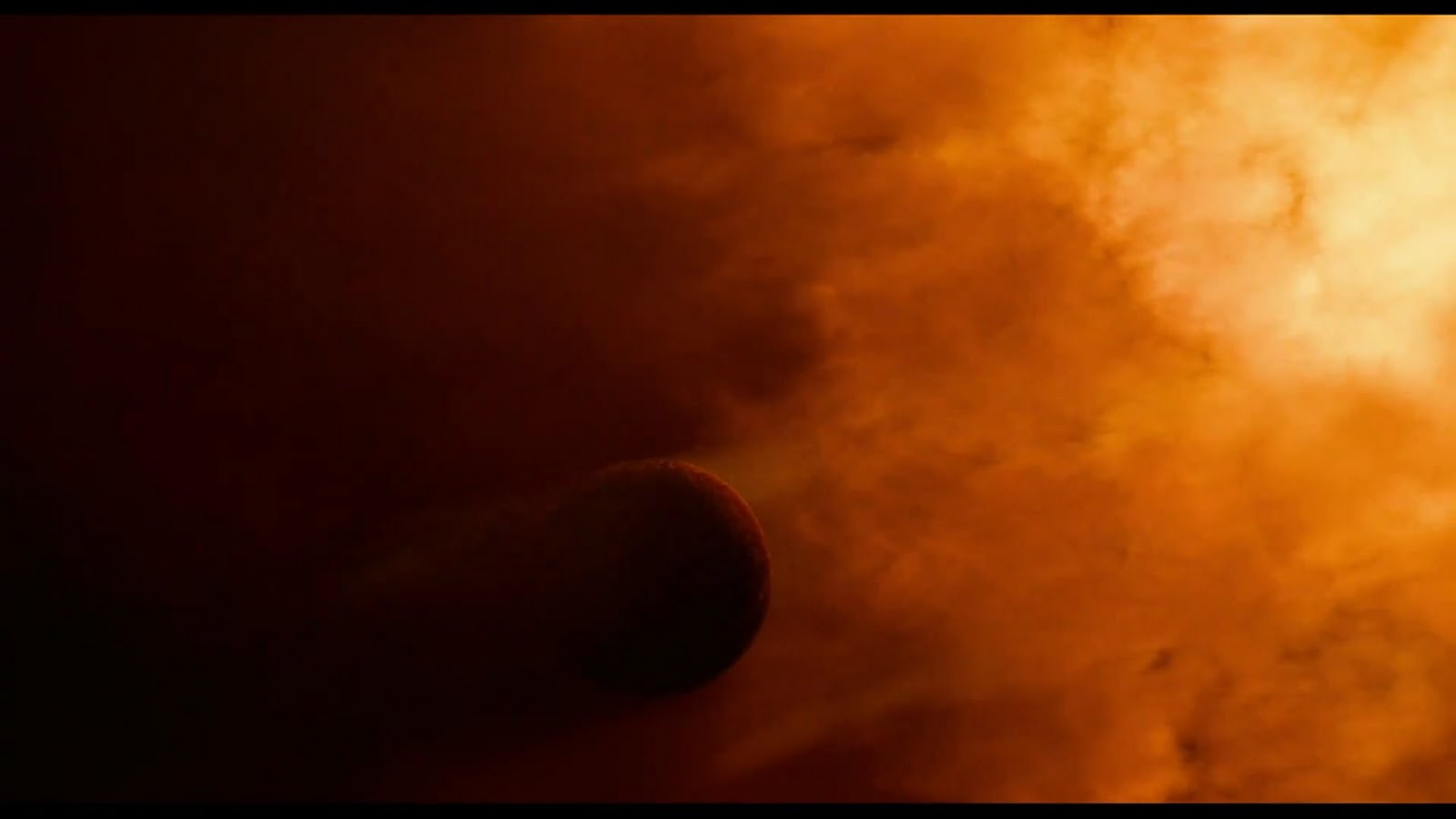
         
          Call it boring, pretentious, endless, rambling, or silly. On some days I'd agree with you. But take one look at any frame of this fantastic film, and you'll see that Emmanuel Lubezki's work in The Tree of Life is nothing short of miraculous. This is the most beautiful movie I have ever seen. Any screenshot of this movie could be framed on my wall as a perfect piece of art. Seeing this movie in the theater was one of the greatest movie experiences of my life, if only for those amazing creation shots. 

Other Nominees:
Manuel Alberto Caro, Melancholia
Jody Lee Lipes, Martha Marcy May Marlene
Janusz Kaminski, The Adventures of TinTin
Newton Thomas Sigel, Drive
Wally Pfister, Moneyball
Bob Richardson, Hugo
Alwin H. Kuchler, Hanna

Best Leading Female Performance
          Kirsten Dunst blew me away in Lars Von Trier's elegant, devastating Melancholia. Every second with her on screen is electric, dynamic, fascinating. Dunst, who I've never really thought much of as an actor before this film, has officially solidified herself as one of my favorites. With just one movie. She's that good, here. Dunst takes great material and makes it excellent. I love her performance in this movie. 

Other Nominees: 
Elizabeth Olsen in Martha Marcy May Marlene
Rooney Mara in The Girl with the Dragon Tattoo
Charlize Theron in Young Adult
Viola Davis in The Help

Best Leading Male Performance 
         
           Michael Shannon's performance in Take Shelter is not only my favorite performance, of any kind, all year, but it is one of my favorite performances of all time. He is so convincing, so scary, so effortlessly terrifying in this role that I will have a hard time seeing him as anything else. Shannon works with his eyes, his body language, and silence to craft an intense and emotional performance that is unlike anything I have ever seen. Go see this movie. Now. Michael Shannon is unbelievable. 

Other Nominees:
Ryan Gosling in Drive
Brad Pitt in Moneyball
George Clooney in The Descendants
Asa Butterfield in Hugo

Best Director
          Nicolas Winding Refn had already made a name for himself with Bronson, the Pusher trilogy, and Valhalla Rising before his outstanding Drive, but nothing could have prepared me for what he did with the film. The material itself is quite barebones and minimalistic -- the screenplay based on a novella of the same name that consists mostly of interior monologue. But Reft, after meeting with Ryan Gosling and listing to REO Speedwagon, found a way to make the film something more. With impressionistic cinematography, long takes of silence punctuated by unspeakable violence, and performances from some of the best actors working today, Refn turned Drive into the must see movie of the year. The style, the performances, the soundtrack, the story. Everything works, here. And it's because of Refn's skill as a filmmaker that it all came together so well. 

Other Nominees:
Lars Von Trier, Melancholia
Sean Durkin, Martha Marcy May Marlene
Steven Spielberg, The Adventures of TinTin
Kelly Reichardt, Meek's Cutoff
Martin Scorsese, Hugo
Bennett Miller, Moneyball
Joe Wright, Hanna

Best Film of the Year
          Despite his insistence that he's a Naze. Despite his inability to have a charming persona in public, Lars Von Trier really is one of the great living directors. Dancer in the Dark, Breaking the Waves, Antichrist, Dogville, and Europa are all masterpieces. And then, even further up the spectrum, there is Melancholia. This is the movie Trier has been trying to make for over twenty years, and he has finally done it. It has his dark humor, his knack for pulling incredible performances from his female stars, his gorgeous cinematography, his ever-present need for some kind of gimmick (another planet in the sky!), and signs of his devastating depression. Melancholia is a near-perfect movie. The best film of the year. 

Other Nominees: 
Drive
Young Adult 
Moneyball
The Tree of Life
Martha Marcy May Marlene
Take Shelter
The Adventures of TinTin
Hugo
The Girl with the Dragon Tattoo
The Descendants
Crazy Stupid Love
Insidious 
Hanna

Who are some of your picks for the year? Let me know in the comments or on Facebook!

Thursday, January 5, 2012

Top 10 Most Entertaining Entertainments of 2011 (That I saw/heard)


          2011 was a good sport. There were threats of apocalypse, boy band reunions, singing film directors, and strange "NOOOOO!!!!" inclusions into Star Wars movies. And, despite all of that, 2011 still offered some fantastic entertainments. While we certainly got some important works of art delivered to us this year (there will be a blog on my favorite films of the year around Oscar time), I'm going to, in this blog, list the most fun entertainments I encountered this year. So, without further ado, and without categories, I give you my ten favorite entertainments of 2011.

10. Parks and Recreation 
          Parks and Recreation's first season was not very good. It was eerily similar to The Office and the jokes were stale. I kept with it, and in the second season I could see glimmers of excellence shining through. Now, after the near-perfect third season, I can't think of another show this consistently fun to watch. Each character brings something fresh and interesting to the show, and the addition of Rob Lowe might be the single most brilliant creative decision all year. Parks and Rec might be a show that takes some time to get in to, but you'll be so glad you stuck with it. Ron Swanson. Ron Swanson. Ron Swanson. Ron Swanson.

9. Horrible Bosses 
          For those of you who saw Horrible Bosses with me in the theater, I'm sorry. I'm sorry that you couldn't hear anything anybody was saying because I was laughing so hard. I couldn't help it. I was so surprised by the unbelievable comic timing, the hilarious, brilliantly engineered gags, the fantastic supporting turn by Colin Ferrel, that it didn't occur to me that there were other people around me. But don't worry, I'll probably never laugh that hard again. It was a once in a lifetime moment. Something magical happened to me when I saw that movie for the first time. It is one of the most fun and engaging movie theater experiences I've ever had.


8. Middle Brother - "Middle Brother"
          Deer Tick, Dawes, and Delta Spirit merged into one this year, and it was glorious. It has been a long time since an album has so completely absorbed me. From the melancholy, Sunday afternoon drawl of the opening track, "Daydreaming," to that Buddy Holly-esque title track, I can't even come up with enough positive adjectives to compile an accurate description. Deer Tick's James McCauley is the standout vocalist on the album, and his verse in the Dawes cover, "Million Dollar Bill," is equal parts heartbreaking and inspiring. I have listened to this album over fifty times since November, and I don't see myself stopping anytime soon. It is absolutely a blast to listen to.

7. Mission Impossible - Ghost Protocol
         Brad Bird, the master director behind The Incredibles and The Iron Giant, thought he'd make his leap to live action filmmaking with a high budget blockbuster sequel. The Mission Impossible franchise is one of the more uneven movie franchises I can think of, with the quality ranging from the passable original film, the deplorable second film, and the fun and exciting third film. However, Bird's film is a horse of a different color. With the additions of Jeremy Renner (adding much-needed credibility to the ensemble) and a plot that actually makes sense, Ghost Protocol succeeds in almost every way possible. From the perfectly conceived prison-break that opens the film to the much publicized skyscraper scene, this film works remarkably well. The direction, the effects, the performances (yes, Tom Cruise is good), and the plot all work together in a way that few action movies can duplicate. This is popcorn entertainment at its very best.


6. tUnE-YaRdS - "W H O K I L L"
          Merrill Garbus's sound perfectly replicates that feeling you have when you get off work, or eat a good meal, or take an extremely refreshing dip in a hot tub. Her music makes you warm, giddy, excited. The beats are electric, interesting, innovative. "W H O K I L L" is one of those rare albums evolves with each listen. It shows you something new with each play through. The real standout song on this album is the opener, "Bizness," which might be the grooviest thing produced all year.

5. Louie
          Breaking Bad may be the "best" show on television, but Louie is by far the most entertaining. Louis C.K.'s tour de force of awkward, gritty, dark, hysterical, and poignant subject matter is one of the most rare and pure examples of storytelling I've ever seen on television. He writes, directs, produces, edits, and stars in every episode, and with that kind of creative control, C.K. has done remarkably well. This year, we were treated to one of the most awesome moments in television history because of this show. I think that's something we can all be thankful for.

4. Uncharted 3: Drake's Deception
          You wanted to be Indiana Jones when you were younger. You wanted to kill bad guys, get the girl, find treasure, solve centuries old puzzles, climb tall buildings, and make hilarious one-liners whenever you did something amazing. You wanted to walk away from explosions that you caused. Well, you never will. You will never do any of those things. So the next best thing is picking up this game. It is the single most fun experience I've ever had playing a video game. It's like the best Indiana Jones movie you never saw. Don't act like you're not interested because you're "not into video games." This isn't a video game. It's THE video game.

3. Hugo
          I've already written a review of Hugo, so I'll just say this. If you've ever said that 3-D has no place in the movies, or that it's nothing but a gimmick that is used primarily to steal our money, then I highly recommend you go see this movie at once. If you've ever wondered what makes the silent-era films so magical, but you're afraid you'll be too bored to sit through them, then go see this movie. If you want to see one of the most inspiring, beautiful, and touching love letters to film ever made, go see this movie. Go see this movie. Now.

2. The Felice Brothers - "Celebration, Florida"
          For their newest album, The Felice Brothers have constructed an angry, strange, atmospheric, and terrifying series of songs that entertain like few can. After honing their almost Dylan sound for years, the brothers have changed things up a bit by adding electronic drum kits, noise machines, group harmonies, and other surprises. The album is loud and mean and it knows exactly what it wants. It wants you to dance, to sing, and to nod your head in agreement. "Yeah," the album makes you say, "the world really is a strange place." We all need to be reminded of that every now and again.

1. Hanna
          When I began making this list, I immediately knew what would take the top spot. Hanna absolutely blew me away in every regard. Joe Wright, the director of Pride and Prejudice, Atonement, and The Soloist, had never really impressed me all the much in his previous outings. So much so, in fact, that I didn't even bother to see this movie in the theater. I figured it would be another middling success from a director whose promising talents seemed to be hiding behind a very stiff upper lip. But, lo and behold, by the time I actually got around to watching this movie, I instantly fell in love. The action is perfect, the dialogue is snappy, the performances are outstanding, and the soundtrack is gorgeous and groovy. I can't say enough good things about this film. It is absolutely entertaining in every sense of the word, and it is the most fun I had all year.

Some of the least entertaining entertainments this year


  • David Lynch - "Crazy Clown Time"
  • Your Highness
  • Sucker Punch
  • Jack and Jill
  • Lou Reed and Metallica - "LuLu"
  • Owl City - "All Things Bright and Beautiful"
  • The Green Lantern

Friday, December 23, 2011

Movie Review: Martha Marcy May Marlene

          When I saw the emaciated, tired, dehydrated John Hawkes in last year's fantastic Winter's Bone, I knew that I'd quickly see him again in a role that truly let him inhabit what Bone only hinted at. He's got a spark in his eyes that requires attention, even sympathy. Even when the rest of him is angular and cold. He's got a mean face and a cracked voice. In Winter's Bone, all it takes is one long look for him to make his points. We can just look at his eyes and know what he's seen.

          Sean Durkin, the writer and director of the haunting Martha Marcy May Marlene, must have seen what I saw in Hawkes last year. Only, instead of playing a guilty man trying to go clean, Hawkes has been cast as the charismatic leader of a small commune in the Catskill mountains.

         Sadly, Hawkes' character, Patrick, has been relegated to a supporting role.

         This is not to say that the film is ruined by this fact, but I am confident that a film about Patrick would be infinitely watchable. Hawkes gives the best performance in the movie, and one of the best performances of the year, and there is, somewhere deep down, a pain in my heart that he isn't given more screen time here to work with. But lucky for us, Elizabeth Olsen is also in the movie.

          Playing the titular Martha (sometimes Marcy May, sometimes Marlene) is Olsen, giving a totally out-of-nowhere debut performance that somehow carries the enormous weight of Durkin's unusual and disturbing screenplay, jumping between the confused and emotionally exhausted Martha and the confident leader that is Marcy May. The chronology of the film is jumbled, not unlike 21 Grams or Pulp Fiction, and sometimes the audience is unsure of which timeline Martha is in until late in the scene.

         Martha Marcy May Marlene centers around a young woman, Martha, who is accepted into a commune in the Catskills and is slowly brainwashed into believing the increasingly dangerous rules and philosophies professed by the commune's leader, a much older, enigmatic man named Patrick.

          A parallel plot runs through the film in which Martha has run away from the commune and is taking shelter at her sister's lake house in Connecticut. Martha, in these lake house scenes, is tormented by her memories of the commune, where she took the name Marcy May and witnessed countless disturbing and horrifying actions by her "family."


        The film seamlessly cuts between the two stories, linking them with visual motifs, music cues, and lines of dialogue. Before long, it becomes clear that Durkin wants to confuse us the way Martha is confused by her memories. "Do you ever wonder if something is a dream or a memory?" Martha asks her sister one night after a particularly haunting flashback. For the audience, we're thinking the same thing. These flashbacks are often followed by Martha waking up confused, scared, and looking for a way to escape.

        The cinematography is elegant and fluid, much like the camerawork of Roger Deakins or Harris Savides, and the up-close, raw handheld moments in the otherwise perfectly framed shots punctuate the film with bursts of intensity. Durkin is a visualist who seems capable of creating the imagery we've seen from filmmakers like Andrew Dominik or Ingmar Bergman--ghostly visions that stay with us long after the lights have come back on. His ability as a writer may not be quite on par with his excellent eye, but his screenwriting chops are definitely there. The film's dialogue is mostly solid, but the real pleasure in Martha is its interesting use of story structure and juxtaposition. To give away the transitions and cues he uses would be a disservice to those of you who wish to see the movie for yourselves. So I'll just say this--the transitions are magic.

      The highlights of the film are the great performances from Hawkes and Olsen, the beautiful cinematography, and the interesting structure Durkin has given the entire work. These highlights are definitely worth the price of admission.

     What the film lacks is convincing motivations for the supporting characters, and what I think is a much-needed focus on the backstory between Martha and her sister's relationship. I could also do with more Patrick. Hawkes' performance is too good for us to get as few scenes with him as we do.

I give Martha Marcy May Marlene 7.5/10 confusing movie titles.

Sunday, December 11, 2011

Movie Review: Melancholia


          It's another week, and it's another review of an apocalyptic film that deals with crippling mental disorders. However, unlike last week's Take Shelter, which had fun playing with our perceptions of what's real or what's imagined, Lars Von Trier's take is decidedly less subtle.

        Melancholia is the second film in what I can only imagine to be the most devastating film trilogy of all time. Of course, Trier does not make trilogies in the literal sense, but he always works in threes stylistically and thematically. His most famous "trilogy" is the Golden Heart Trilogy, consisting of Breaking The Waves, his breakout masterpiece, The Idiots, his most unwatchable film, and Dancer in the Dark, a film that makes my tear ducts hate me. These three films are called the Golden Heart Trilogy because each movie's protagonist is mentally incapable of rational thought, yet they are overwhelmingly loving and generous to others. Each film ends with the almost Christ-like protagonist suffering a terrible fate.

       His other trilogies, while more loosely connected, also share similar themes. He has a paranoid detective trilogy from the late '80's and early '90's that shared many stylistic qualities, but his writing was not yet as unified and mature as it has become. His Dogville trilogy, which as of this review is not yet finished, shares the same protagonist through the films, but very different thematic material.

      The trilogy he is working on now, beginning with the much misinterpreted Antichrist, is built around the philosophy that there is nothing worth loving in this world. The protagonists in both Antichrist and Melancholia deal with a depression that makes them immobile. Charlotte Gainsbourg's She in Antichrist is sent into her depression because she feels responsible for her son's accidental death. Her suffering has a concrete cause, a catalyst, that the audience can relate to and sympathize with.

      Kirsten Dunst's Justine in Melancholia does not have such a good excuse. Of course, this does not make her depression any less serious, or real, but it does put the audience in a strange position. Unlike She, who is constantly reporting the reasons behind her feelings, Justine remains silent on the subject. When she does speak, she is lashing out against the people who are controlling her life. She is a character who almost defies sympathy. She is a box we can't open, just like the people in our lives who really suffer from this disease.

     The film begins with a wedding,  Justine's wedding, which has been meticulously planned by her sister, Claire, and we quickly realize that Justine is hiding a deep depression behind her smile. She constantly finds reasons to escape the house, the spotlight, her sister, her new husband. She is suffocated by the ritual of the wedding, by the people who surround her. She doesn't want any of it and she doesn't know how to tell them.

One of the first shots of the film

     Okay, I lied. The film actually begins, as Antichrist does, with a beautifully shot, slow-motion prologue. In the opening shot, Justine has electricity shooting from her fingers and Claire is running across a golf course, sinking into the grass, holding her son. A giant planet is looming over Earth, twenty times its size, sucking the atmosphere into its oceans. And then Melancholia, the titular planet, smashes into Earth, exploding it.

    We get all of this before a single line of dialogue is spoken. Just a few extraordinarily staged shots (most of which can be spotted in the trailer) and one terrifying vision of the end of the world.

    And then the wedding starts. Tens of characters are introduced, not unlike the very best Robert Altman films of the early seventies, and something weird happens. For the first time in a Lars Von Trier film, I had a lot of fun. There is humor and warmth to the first half of this film. Apart from, you know, the destruction of the planet. John Hurt plays a lovable grandfather, Keifer Sutherland plays an arrogant, rich scientist who is trying to please his unpleasable sister, Udo Kier plays a tragically underutilized wedding planner, Stellan Skarsgaard plays a hilariously forthright advertising agent, and the list goes on. The characters are all written quite well, and the scenes often play like the very best sections of Nashville.

     It's a little stunning how warm and funny the first half of the film really is, considering how dark and nihilistic the films final half becomes. This tonal shift is placed almost completely on Dunst's performance, which is, I have to say, remarkable. I have never really seen true talent in Dunst before. She's passable, but I've mostly written her off as beautiful and one-note. But here, she is really doing something special. She is given the almost impossible task of carrying the ridiculous ambition of Von Trier's script, which includes tens of characters, an apocalyptic, science-fiction plot, and wild tone shifts between light-hearted comedy and deeply moving chamber drama.

      I'm not sure how Trier knew she could do it, but she can. And not only is her performance adequate for the film, it's really one of the more nuanced and profound performances I've seen in quite some time. Meryl Streep might be the queen of impersonation and accents, but Kirsten Dunst is the one to beat during this year's awards season. Her performance is stunning.

      The other performers do a good job, particularly Charlotte Gainsbourg, who is relegated to playing what is essentially the audience. Justine's brick wall of emotion is so indecipherable that Trier had to add a character who substitute's all of Justine's emotions for us.


     For the last couple of decades, Lars Von Trier has been writing and directing films that show us exactly what he is afraid of. He is famously scared of everything, having never ridden an airplane in his life, or gone overseas, or even left Europe. He has attempted suicide, accepted Hitler into his heart, and forced Bjork to quit acting, and yet he continues on in his quest to make the world's bleakest movie. I thought that maybe Antichrist, in all of its excruciating, violent, and upsetting glory, was the end result of this quest.

    I was wrong.

   Melancholia is. And it is also the most brilliant movie of his career.


I give Melancholia 9/10 electric fingers

[Note: One small problem I had with the film is that Claire and Justine are sisters, yet one of them has a French-British accent and one sounds like she's from Maryland. Their parents are both British, as well as pretty much everybody else in the movie who isn't Keifer Sutherland. But I got over it.]

Wednesday, December 7, 2011

Movie Review: Take Shelter

   
          Michael Shannon's eyes have been put to great use in the last decade. You might know him from Revolutionary Road, where he was nominated for a Best Supporting Actor Oscar for his portrayal of John Givings, the math professor who has had a psychotic break. Sometimes actors are just born to play a certain type. Tim Blake Nelson has made an excellent career of playing rural idiots, Michael Douglas has made his fortune playing high-class snobs. The list goes on.

         Of course, there are certain pitfalls to this kind of typecasting. For every George Clooney, where variations on a theme can lead to exciting and surprising results, there is always a Michael Ironside, where the performer is forced to play one note parts until they retire.

        For a while there it was looking like Michael Shannon was going to be stuck in the latter category, forever playing the crazy uncle or the unhinged friend. However, in the last few years, Shannon has done a remarkable job of taking challenging roles that compliment his interesting face and physicality. Take his performance in the underrated masterpiece BUG, where his intense eyes almost make us believe in the insects we can't see. Or his performance in 2009's brilliant My Son, My Son, What Have Ye Done?, where Shannon's performance teeters somewhere between Marlon Brando and Bela Lugosi (no small feat), while simultaneously allowing us to project our own fears and desires onto him.

       It seems that directors have taken note of Shannon's ability to convey emotion without speaking. Perhaps more than any other actor working today, Michael Shannon is the one most suited for silent pictures. His performances are always both understated and bombastic, playing with the balance of the two the way a good musician juggles improvisation and precision.

       And in Jeff Nichols' atmospheric, devastating Take Shelter, Michael Shannon has given us the performance of his career.

      Not since There Will Be Blood have I seen a performance that truly frightened me in this way. Shannon is so believable, so truly unhinged, that I often found myself shaking my head in disbelief. Every movement of his eyes and every twitch of his face has true power. He has mastered the physicality of his performance in such a unique and brilliant way that I could not take my eyes off the screen. He is electric here. Terrifying. I believe every second of his performance, and I can't wait to see what he does with the General Zod in Zack Snyder's upcoming Man of Steel.

      As for the film itself, I'll give you a little background. If you haven't seen the chilling trailer yet, here's a quick summary of the plot. Curtis has been having nightmares for the last few weeks. Each one contains a storm. Whenever the storm comes, something happens to his daughter. The dreams become more vivid and violent as the film goes on, and his visions of the apocalypse begin to invade his waking life. Before long, it becomes unclear as to whether Curtis is truly having visions or just succumbing to mental illness.

   
       Jeff Nichols' script and direction are incredibly ambitious for the obviously low budget on this film, and his script does a very good job of slowly building the suspense and the macabre atmosphere of the whole thing. The cinematography is still, deliberate, and the shot composition always leaves the main focus of the frame just a little bit obscured. As the film is told through the perspective of Curtis, Nichols uses the cinematography to limit the audience. We aren't allowed to know what Curtis does not, and Nichols wisely leaves it up to us to decide if Curtis is a prophet or just insane.

      The other standout performance in this film is by The Tree of Life and The Help's Jessica Chastain, who seems to have come out of nowhere this year and surprised everyone with three excellent performances in a row. As Curtis' wife, Samantha, Chastain must perform the hardest job in the film--that is, play opposite such a juicy, provocative role and still maintain the audience's attention. And not only does she hold her own next to Shannon's powerhouse performance, but she sometimes exceeds even his abilities and reaches amazing heights. Nichols better be glad he got Chastain when he did, because she is bound for great things in the coming years--and even greater paychecks.

     Of course, Take Shelter isn't perfect. It is a little overwritten, running perhaps fifteen minutes too long, and sometimes the plot beats are a little predictable, but when this film is in its stride, there is really nothing like it. It is haunting, emotional, honest, and, most of all, ambitious.

    See it for Shannon's performance. It is one of the great performances of our time.


I give Take Shelter 8/10 Spooky Dream Sequences

Friday, November 25, 2011

Movie Review: Hugo

          Let's talk about 3-D. For years, I've been saying that 3-D works best with animation. I've also been saying it should not be treated as a gimmick, but as an element. A tool. Like color, which quickly became the norm of cinema, 3-D should be used as one gear in a large machine. Animation seems to handle this philosophy best, seeing as computer animation has only recently gone from gimmick status to element status in the last decade.

         3-D is commonly employed poorly in live action films. It sometimes works well, Avatar being a nice example (although, really, one could easily consider Avatar a computer animated film), but it is usually used for movies that would otherwise have nothing interesting to offer. The producers fund a lousy film under the promise that the swords will come flying out the screen and the three to four dollar surcharge will come flying out of wallets, not because the film's story can be modified in any way by this extra dimension. Avatar made such an impact because the world James Cameron created felt completely immersive. The film was about virtual bodies becoming real, dreams becoming tangible. The third dimension added a layer of depth to the overall intent of the film. I cannot say the same for The Green Hornet, Clash of the Titans, The Last Airbender, or any other totally valid reasons that people often give for not liking 3-D. Why pay the extra money? It's never worth it.

       Here's the problem. 3-D technology is extremely impressive. When used effectively, the technology can add depth and wonder to the cinematography of a film. However, when used poorly, the technology faces extinction. We are in a transitional period. Like the introduction of color, we are faced with low-caliber variations of a phenomenal tool. For instance, many people believe that The Wizard of Oz was the first color film. It wasn't. People just believe that because the color was used to aid the story, to give the land of Oz depth, and to show people how the technique can revolutionize the way moving pictures can be experienced.

      In a way, this is the story of film. When the Lumiere brothers made their first film of a train moving toward the camera, filmmaking was seen as a triviality. A sideshow gimmick. It took decades for film to be as respected as it is today. And, in some circles, film is still not quite as appreciated as literature or painting.

      Which brings us to Hugo.

       
         Martin Scorsese has made a name for himself in recent years for spearheading an ambitious film preservation society. He has given numerous talks, and made several documentary shorts, in order to spread the news that old films are disappearing each day. And, as one of the most knowledgeable film historians in the world, Scorsese has done pretty well with the campaign. And when I saw Scorsese's masterful, gorgeous new film Hugo, I couldn't help but wonder if any other filmmaker could have pulled off such a watchable educational film concerning cinema preservation.

        Movies are at the heart of Hugo, Scorsese's first 3-D film, and he uses the medium not only to wow audiences with impressive visuals, but to also comment on the film's overall message.

       The film concerns a forgotten silent filmmaker whose entire filmography has been destroyed for the sake of shoe heels (it makes sense in the movie), and how devastating this treatment of film was to the genius filmmakers who were left behind after the world wars.


         Hugo is about film as an art form. It is about the director as artist. It reminds us that there was a time when special effects were new. That the visual wizardry of filmmaking was once shocking, surprising, awe-inspiring. That filmmakers used to be scoffed at for making populist drivel, even while they were producing some of the most incredible work of any artist at the time. At its heart, Hugo is about the relationship between an artist and his/her tools. For the early filmmakers, their tool was considered nothing more than a gimmick, a phase, a temporary distraction from real art. And, as I said earlier, 3-D is the new gimmick.

      Scorsese, one of the most celebrated living filmmakers, was criticized for choosing to make his newest film in 3-D. The fad, as some say, has worn out its welcome. I beg to differ. The fad is not wearing out its welcome, bad use of the technique is. Now that we're finally getting master filmmakers behind 3-D cameras (Werner Herzog, Wim Wenders, to name some Germans), audiences can now decide for themselves whether 3-D is their thing.


      Hugo utilizes 3-D in a way that I have never seen outside of a theme park. The opening shot actually turns your stomach, in the best way possible, when it zooms through a busy train station and weaves around halls and ladders. The photography is kinetic and exciting. The depth is incredible, the shot compositions perfectly suited to the technology, and Scorsese feels right at home with the extra responsibility.

      Also at home are Asa Butterfield and Chloe Moretz, the two young leads of the film. Butterfield in particular, as the titular character, brings warmth and emotion to his role--much needed elements for the mostly silent performance he gives. Moretz plays the opposite of her Kick-Ass character, Hit Girl, as she is an innocent, bookish girl who is terrified of getting into mischief. Moretz grounds the film with her calm, old-soul presence. The two leads play well off of each other, and they are benefitted from the excellent script by John Logan.

     Hugo is a beautiful film. I highly recommend that you go see it, and I cannot stress enough how great the 3-D is here. But you have to meet the film halfway. If you don't want 3-D to be used as a gimmick, don't expect it to act like one. The extra dimension is just that, an extra dimension. This does not mean stuff flies in your face constantly. This means that there is an extra layer of depth to the screen. The shot compositions have become more complicated, and more interesting, because of this technology. Okay? Okay.

I give Hugo 9/10 released Krakens

Friday, November 11, 2011

Cameron Cook Music Company: My current favorite albums

Parody? It's up to you.
          Ever since David Lynch decided to turn his long-time pay site full of exclusive short films and other goodies into a launch pad for his music career, I've been wondering if I should do the same with this blog. Of course, you're all expecting film analyses and reviews, but what's the fun in that? Maybe I should just give up, design a Parisian nightclub, and record an album full of synth-pop and bad Badalamenti clones.

        Okay, to be fair, there are some good tracks on Lynch's LP, which dropped earlier this week, but the other tracks are plagued by a hollow core. Lynch is a filmmaker first. That is his true talent. He can play a mean guitar, he can create an excellent aural texture, but he does not understand what it takes to craft an album. At least not yet. But Karen O. tried. And that's all that counts.

       So here we are. In a world where David Lynch, one of the premier American filmmakers, retires from the medium that made him famous so he can sing into a vocoder about red shirts. And on top of that, your favorite movie blog just released an article on music. It's a sad day. But chin up, because you might find yourself downloading these artists on itunes before you know it.

My fifteen favorite albums of all time (in no order)


The Final Cut--Pink Floyd
          Even though I can safely tell you that nostalgia is 50% of the reason behind this album's inclusion, I can still get behind some of the tracks. Pink Floyd (lets face it, Roger Waters for this one) managed to somehow make an entire album predicated on one emotion--fierce devastation. Every song has the emotional capacity of an entire Lars Von Trier film in only three minutes. The title track is still a favorite of mine, even after all these years, for its sheer arena-rock balladry. While this album is certainly a departure for the band that brought you "Jugband Blues," it's also a real treat for those who want a good cry. Highly recommended.

TOP TRACKS: The Final Cut, Your Possible Pasts, The Fletcher Memorial Home

Have One On Me--Joanna Newsom
          I had a summer vacation a couple of years back where I delivered pizza for Pizza Hut. It was not a very fun job, but it had one undeniable perk. I got at least three hours a day, for an entire summer, of music enjoyment in my car. However, as I was working one of the more dangerous jobs around, I decided that taking my iPod to work was probably a bad idea. So I listened to CD's the old fashioned way. This made me appreciate the strength of the album again. Not only that, but it forced me to choose more wisely. So when I bought Joanna Newsom's follow up to her beautiful Ys (introduced to me by Allen Butt), it was mostly because the thing is a TRIPLE ALBUM that spans over two hours. I needed a long album to fill my time. I listened to it once. Then twice. Then over fifty times. Every time I hear it I get something new from it. The lyrics, the instrumentation, the atmosphere. Everything about the album is fresh and exciting and brilliant.

TOP TRACKS: '81, Go Long, Jackrabbits, Esme

The Age of Adz--Sufjan Stevens
          Where was he supposed to go after the jaw-dropping double threat of Come On Feel The Illinoise and The BQE? What was Stevens's next logical step? Famous for his broad instrumentation and huge sound, Stevens really swung for the fences with this one. While many fans argue that he relies too much on noise and distortion on this outing, I find the fuzzy, crowded atmosphere to be just right for the singer/songwriter. His lyrics, the most personal and cynical of his career, perfectly marry the digital whirrs and buzzes that Stevens supplies. It addresses his fame, the expectations of his fans, his ego, his religious demons. The album is Stevens's most interesting, and arresting, work so far.

TOP TRACKS: Vesuvius, All For Myself, Futile Devices, Impossible Soul

My Beautiful Dark Twisted Fantasy--Kanye West
          My jaw dropped when I heard this album for the first time. It is, without a doubt, the most maximalist music produced for commercial artists that I've ever heard. In many ways, Fantasy is not so different from Age of Adz. They're both filled to the brim with noise, voices, and emotions. They're both produced by guys who have written entire albums about Illinois. They're both musicians who address their personal demons directly in their lyrics. Their egos often control their production. I've been a casual fan of Kanye for a few years. Since high school, around the time Late Registration dropped, I've been fascinated by West's ability to make his innermost fears and regrets the highlights of his albums. He is a true pop star, the most interesting pop star working today, because he is a real person. He's a jerk, a genius, a child. He's defensive about his music, his mother, his intelligence. Fantasy is the album he's been trying to make for ten years, and it does not disappoint. It is one of the finest albums I've ever heard.

TOP TRACKS: Monster, Runaway, Lost in the Woods, Blame Game

Fever Ray--Fever Ray
          Karin Andersson's side-project is, in my opinion, far more interesting than Andersson's "real" band, The Knife. Not because Fever Ray is necessarily better, but because it is a stronger expression of Andersson's abilities as a producer. The Knife, known for its catchy, '80's-loving indie-electronica sound has its own thing going on. The Knife is all about exuberance and living in the moment. Fever Ray, on the other hand, is a bit darker. A bit more unsettling. So of course I love it. The album is packed with eerie soundscapes and mysterious lyricism. It is about loneliness, despair, growing up, dying. The album is also just that, an album. I can't listen to just a couple of tracks from this masterpiece, it is made to be listened to all the way through.

TOP TRACKS: If I had a Heart, Seven, Keep the Streets Empty for Me

Stop Making Sense--Talking Heads
          There are few things David Byrne can't do. Make a terrible live album is one of those things. Stop Making Sense is not only the perfect setlist made during the peak of Talking Heads' talent, but the album itself works as the single best introduction to the Talking Heads possible. Match the album's amazing setlist with the fact that it is a miraculously good concert film, and you've got yourself a Friday night.

TOP TRACKS: Heaven, Once in a Lifetime, This Must Be the Place(Naive Melody), Found a Job

Live At The Royal Albert Hall--Bob Dylan
          We all know that Dylan went electric. We all know about the uproar. We know the history. But sometimes you need to experience these things for yourself. Dylan's 1966 performance in the Royal Albert Hall is unmatched when it comes to live albums. The first set, all acoustic, displays his excellent showmanship and (yes, I'm serious) his amazing vocals. He doesn't need to be classically trained. He doesn't need an objectively fantastic voice to be a fantastic vocal performer. The songs weren't written for that. It's an Americana groan, a tired dust bowl cry. His voice in this performance is stunning. The second half of the album is his electric set. The audience goes wild. The famous "JUDAS!" shout can be heard during this set. It is a perfect live album. The best possible display of Dylan's amazing talent.

TOP TRACKS: It's All Over Now, Baby Blue, Mr. Tambourine Man, Ballad of a Thin Man

In The Aeroplane Over The Sea--Neutral Milk Hotel
          You knew this was coming. It's the Citizen Kane of albums. Everybody's favorite. But for good reason, the thing is sensational. The lyrics, the vocals, the song structure. It's a masterpiece. Whenever I listen to "Oh Comely" I can do nothing but marvel at Mangum's words. It is a magnificent piece of writing.

TOP TRACKS: Oh Comely, Two-Headed Boy Part 2

Achilles Heel--Pedro The Lion
          Everybody has an album that speaks to them. An album that feels like it took all of your beliefs, fears, regrets, and desires and turned them into a forty minute experience. This is that album for me. From "Bands with Managers" to "The Poison," Pedro the Lion's album is about contentment, and how contentment can spread like a disease. Everything from Bazan's vocals to the tight musicianship of the band to the song structure to the song order of the album is as perfect as I've ever seen. On most days I consider this the best album I've ever heard.

TOP TRACKS: Bands With Managers, Arizona, Start Without Me

Songs From a Room--Leonard Cohen
          Cohen's follow up to his debut album is a more somber, lonely kind of album. Even for him. Although his guitar is backed by a full band this time around, the album still seems sparse. Minimalist, even. There are moments in the album, such as the French chorus in "The Partisan," where the music escapes the titular room and reaches out beyond the desolation that Cohen so famously describes in his lyrics. But these moments only serve to make the listener more aware of how contained the album really is. In the tragic, beautiful song "Seems So Long Ago, Nancy," Cohen describes a suicide, and its reasons, in grim detail and with sentiment. It is Cohen's breathtaking lyricism that escalates his unapologetically rough vocals. His nonchalance to it all is the reason these songs have so much impact. Yes, these things happen. But they're going to happen again.

TOP TRACKS: The Butcher, Tonight Will Be Fine, The Partisan

Celebration, Florida--The Felice Brothers
          It didn't take long for this one to become my favorite. The Felice Brothers have been among my go-to bands for a while now. The storytelling aspect of Ian Felice's lyrics proves to be a good fit with me. As you've probably guessed, I enjoy me a slow, wordy song. But this album is something special. It contains similar elements to the Brother's previous work, but it's just a little unhinged. The album is angry, possessed by cynicism, jaded. Its title, named after the town Walt Disney founded near Disney World, was picked after that town had its first murder last year. It was an ax murder. Ian's lyrics cover everything from Honda Civics to Oliver Stone to Ponzi Schemes to the weight of expectation from fans. This album is loud, angry, experimental, and brilliant.

TOP TRACKS: Fire in the Pageant, Ponzi, River Jordan

Bone Machine--Tom Waits
          Like Bob Dylan, Tom Waits tries to do something a little different with each of his albums. With Mule Variations, waits went for the dust bowl sound. In Rain Dogs, Waits tried to recreate the immigrant experience, and so on. Bone Machine is his album about death. From the opening track "Earth Died Screaming," there is no mistaking the album's apocalyptic themes. Waits waxes poetic about various aspects of death, ranging from bodies turning into dust to the tragedy of dying young. He rants about not wanting to grow up and get old. He refers to bodies as machines made of bone, performing their functions until they have to shut down. However, even with the somber subject matter, Waits finds a way to make it fun with his inventive percussion and beautiful songwriting.

TOP TRACKS: Earth Died Screaming, Who Are You?

Nebraska--Bruce Springsteen
          You guessed it, my favorite album from arena-rocker's vast discography is his most quiet, moody, and wordy. Originally recorded as demos for a later, E Street Band album, Springsteen found himself writing from an introspective, singer/songwriter place instead. Songs like "Nebraska" and "Atlantic City" started spilling out of him, and he decided to just roll with it. Nebraska is about the American heartland, and how all is not well. The titular track covers the same ground as the Terrence Malick film from which it is based, Bandlands, and it details the murderous road trip of a young couple across the Nebraska badlands. The album plays off of Springsteen's fear of loneliness, regret, solitude. It is sparse and uncompromising. A great album.

TOP TRACKS: Nebraska, Atlantic City, Highway Patrolman

The Crying Light--Antony & The Johnsons
          Even Bob Dylan and Leonard Cohen fans need to hear some beautiful singing every now and then. It's a good thing Antony's around. The piano-playing, falsetto singing, lyrical genius that is Antony Hegarty really swings for the fences on this release. He speaks about nature, gender (Antony himself is transgender), love, abandon, God, and death with such confidence and such beauty that it is impossible not to believe him. The instrumentation alone is absolutely gorgeous. Pure ear candy.

TOP TRACKS: Aeon, Daylight and the Sun, The Crying Light

Breach--The Wallflowers
          Breach is one of those albums I can listen to at any time and get into. Long after "One Headlight"'s radio omnipresence left the country, frontman Jacob Dylan (son of Bob) wrote the songs that would end up on this album. It still has that groovy '90's sound, but the lyricism is much more aggressive and dirty. The sounds are catchy, maddeningly so, and the album is really meant to be played as a unit. For this reason, no real singles came out of this bad boy. And that's a shame, because the album is really pretty amazing.

TOP TRACKS: Hand Me Down, Witness, Birdcage

What are some of your favorite albums? Let me know in the comments below or on Facebook!